Common, and worth getting checked
Pelvic floor problems are common, and many women are told they're just part of having kids or getting older. Many respond well to treatment, and an assessment is how you find out what's going on.
We work with:
- Leaking when you cough, sneeze, laugh, run, or lift (incontinence)
- Urgency or frequent trips to the bathroom
- Pelvic, hip, tailbone, or low back pain during or after pregnancy
- Postpartum recovery, including abdominal separation (diastasis recti)
- Pressure or heaviness in the pelvis
- Prolapse
- Pain with intercourse
- Changes during perimenopause and menopause
Established pelvic floor care, with a whole-body view
Your care starts with the established methods of pelvic floor physical therapy: assessing and retraining the pelvic floor muscles, coordinating them with breathing, and education on daily habits that affect symptoms.
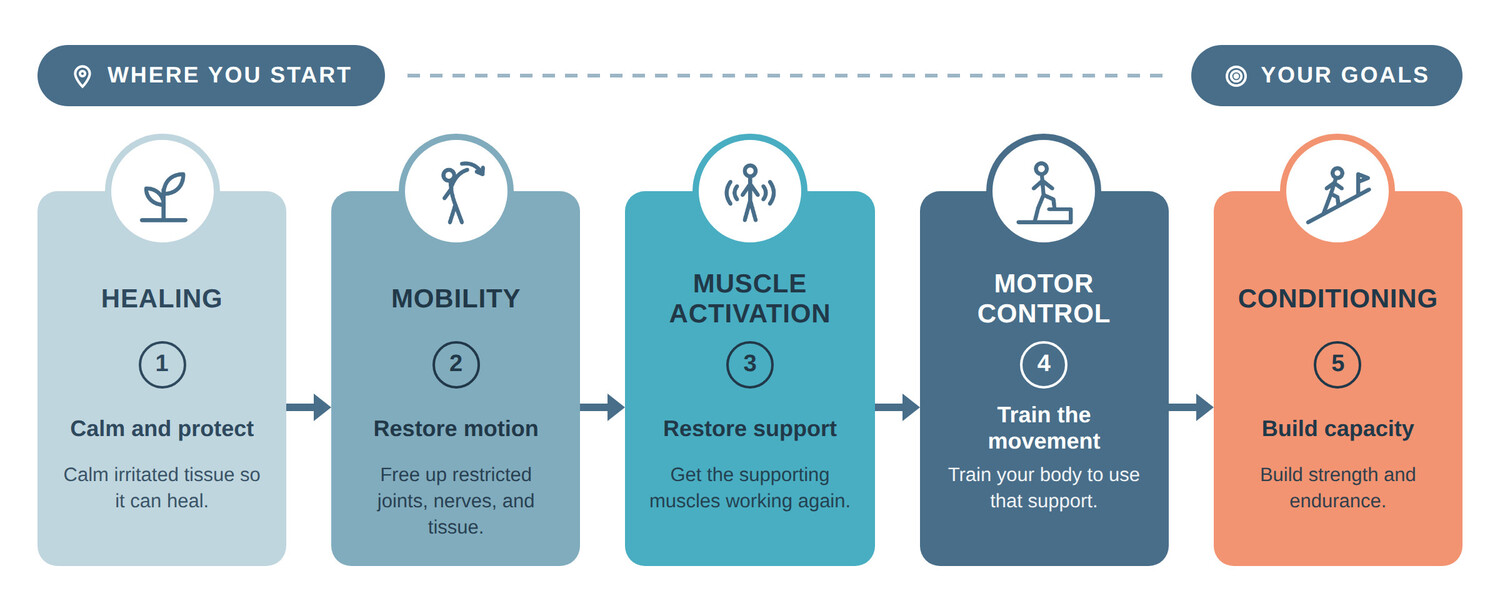
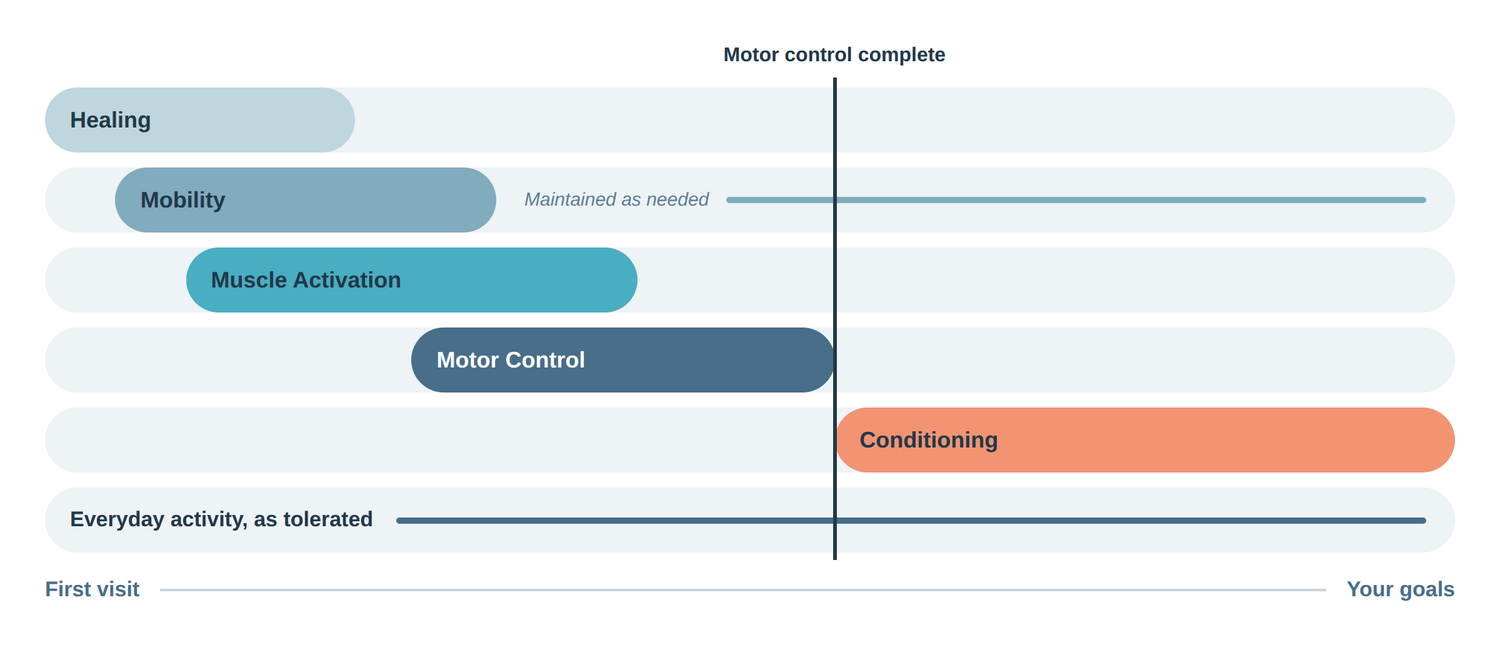
We combine that with the Neural Fascial Systems approach. Your pelvic floor works as a team with your breathing, deep abdominal muscles, hips, low back, and the organs and connective tissue of the abdomen and pelvis. When one part of that system isn't doing its job, the others compensate.
So we assess each of those structures individually, not just pelvic floor strength. Some pelvic floors are weak, some are overworked and can't relax, and some are being affected by restrictions elsewhere. Knowing which applies to you changes the treatment.